

Behind every bright pink videogame promotion is a female game dev headdesking in frustration.
The editors of InTheSnake wrote me to let me know they’re taking my flash fiction submission for their October issue! I’m completely thrilled.

After I told Twitter, I had to come up with a short summary of the piece for the table of contents. This was not so easy for me.
“It’s flash fiction,” I told Harold, “I’m telling my story in as few words as possible. How can I summarize that any further?”
“You need a logline.” He said. “What’s the story about?”
“A muse from classical myths living in our world, some thoughts on the consequences of the choice to follow or not follow a creative path. Being supportive or supported in relationships. Possibly even finding love later in life. Or at least not being emotionally dead. It’s not really clear.”
Harold is a truly good person, and did not draw attention to any recurring themes in my work.
I’m quite happy with the final summary: “a classical muse in our world, no longer young and reviewing the romantic and artistic choices she’s made,” but I’d still prefer to give a pullquote from the story.
She didn’t mind the presence of girlfriends and wives in the lives of her men—she was a muse, she didn’t pick up socks—but she felt her age as the poets and playwrights of her youth turned practical and became mid-level managers, talking about maintenance of cars and lawns. Once she met an old lover, and when he mentioned his insurance deductible, she felt she was slipping slowly from a statue back into a block of marble.
A crisis of some sort is not uncommon for successful people at midlife, but the age of this midlife meltdown has started coming earlier and earlier. People have started talking about a “thrisis” in the thirties and a “quarter-life crisis” in the twenties. I’ve also seen the same pattern in younger people, even adolescents, who have a jam-packed schedule of schoolwork, homework, after-school activities community volunteering, tutoring and test prep. I haven’t heard a catchy name for it yet, but they too suffer the same crisis of the soul that comes from pouring every moment of your time and every ounce of your being into others’ expectations.
— from Play: How It Shapes the Brain, Opens the Imagination, and Invigorates the Soul
It turns out that I’m the last person in the New York area to find out about Maker Fair, a grown-up science fair, a tech show, and a craft fair all at once. And a indie music concert. And a display of futuristic sustainability.
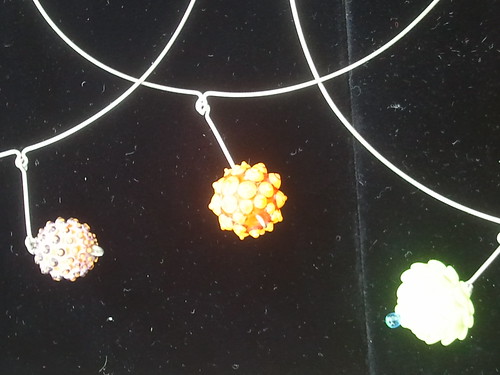
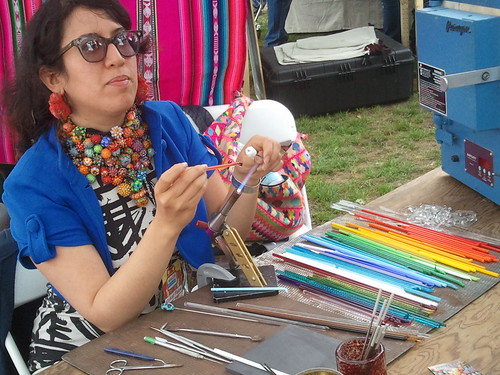
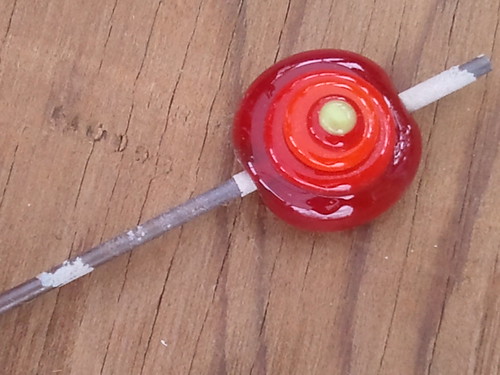
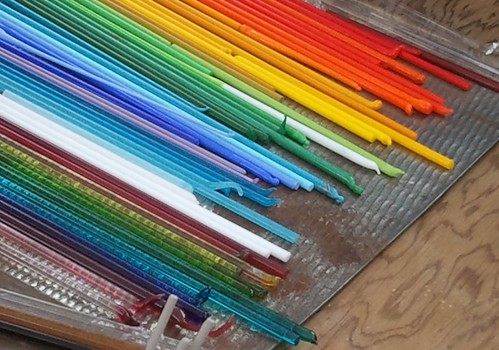
I met up with Tryon and Katie, Andrea and Nate, Jon and Kimberly, and Roy (who all knew about it already), and it was pretty great. I went to a couple presentations of new tech toys (Co-op online Connect Four with PlayNiceWithOthers and cyberpunk Sifteo gameblocks stand out), held in tents in the parking lot, and we checked out gorgeous crafts.

Hipster Barista Girl: So, do you, like, work for the space program?
Harold: No. This is a Starfleet shirt.
We started talking about normal stuff—family, work, college. I told him my brother was a gamer. And then he casually mentioned that he played Magic: The Gathering when he was younger.
“Actually,” he paused. “I’m the world champion.”
I laughed. Oh that’s a funny joke! I thought. This guy is funny! But the earnest look on his face told me he wasn’t kidding.
I gulped my beer and thought about Magic, that strategic collectible card game involving wizards and spells and other detailed geekery. A long-forgotten fad, like pogs or something.
 She finds out that her date is not just a guy who enjoys collectible card games, but a champion Magic player, and then writes the publicly mocking blog post.
I might be biased here. I see men who play games as smarter and more creative than non-gamers, and I see smart and creative guys as better boyfriend material. I know not everyone sees it this way, but I don’t understand how playing a card game is somehow a shocking revelation that makes him undateable. I’m also not sure if the complaint here is that he plays Magic, or that he’s good at it.
Would she have felt the same way about dating a pro golfer? It’s probably just as expensive and time consuming. Maybe it’s just cooler to be bored by a guy’s handicap stats than his deck stats.
I don’t know where Ms. Berenzak usually meets men, but in my world, a smart, successful, good-looking (she doesn’t actually say this but I’m sure if he had anything to mock physically, she’d had done so), nerdy, hedge-fund guy is a winner.
Just like you’re obligated to mention you’re divorced or have a kid in your online profile, shouldn’t someone also be required to disclose any indisputably geeky world championship titles?
If her point is, as waves of apologist commenters have claimed, that dating profiles can be misleading through omission, I wonder if online daters should be obliged to disclose shallowness. Fortunately for any fellows who meet this girl, her shallowness is now easily Googleable.
Quotes via My Brief OkCupid Affair With a World Champion Magic: The Gathering Player by Alyssa Bereznak
Picture via Friday Night Rants, who claim they didn’t mean anything by using a girl with glasses and purple hair.
 Go, go, Godzilla!, by Simpson’s Paradox
Meg: I’m turning on my Lady Pop Pop* — tell me if it gets annoying, ok?
Harold: I am putting on my headphones anyway
listening to man music
I thought for sure that would get a reaction
Meg: I’m sorry, your testosterone stunned me into speechlessness
Harold: As ti should
is
it
Meg: spelling’s for womenfolk anyway
*That’s my Lady Gaga Pandora to non-Harold people.
Korby Sears from Social Games Today and I talked at Casual Connect. I’ve been wanting to work with Korby for a while now, and it was pretty awesome to finally meet in person and chat about how TVs suck free time, my gameification annoyances, social games done right, and some of the awesome Casual Connect speakers.
