

Without even realizing it, many internet users mistakenly assume that cyberattackers follow conventional rules of behavior. People try to reason with trolls or appeal to their better nature. These responses are similar to how you might approach a friend who’s inadvertently insulted you, or a family member who disagrees with you about something important. But trolls are not like your loved ones, and research shows that these strategies are ineffective because they misapprehend a troll’s true motives, which are usually to attract attention, exercise control, and manipulate others.
Many people who engage in online harassment are not what most of us would consider to be well-adjusted. In 2019, scholars writing in the journal Personality and Individual Differences surveyed 26 studies of internet “trolling,” cyberbullying, and related antisocial online behaviors. They found significant associations with psychopathy, Machiavellianism, sadism, and narcissism, in that order. In other words, just as you would conclude that a stranger attacking you in person is badly damaged, you can conclude the same about a stranger attacking you on social media.
Source: How to Deal With Trolls by Arthur C. Brooks, The Atlantic
I usually enjoy Brooks’ column. Sure, there are some offnotes when it’s too clear that author’s job is to think about happiness, and he doesn’t quite realize how goofy his suggestions are for anyone in the working classes. But usually, each article presents a way to think about what we choose in our lives, and often about the gap between what seems like happiness and what’s actual contentment.
This article, all about trolls and why there’s no way to resolve with bad-faith hostility, is a particularly good one. I’ve thought about it a lot of times since I first read it. As Twitter becomes a trash fire, with not just endless sockpuppet attacks but actual cash prizes for outrage engagement on the worst, most hostile takes possible, I’m thinking about it again.

 Escape Room Concept: The players work at an adult-ed program and need to print something in 1 hour before students arrive, but the toner, paper, and printer access code are stored in different locked-away, hidden cupboards, so teachers aren’t wasting supplies.
 But this description of the 90s
  We have a new college intern at my school now, who’s teaching one conversation class per week. I really took a lot of joy in setting her up in my classroom, showing her where I keep my speaking games, crayons, bingo cards, books, my secret backup lesson for bad days, etc. Here’s how to use the projector and the copier. Please, come in, move the chairs around however you like, this is your room one afternoon a week.
 Haven’t done a gaming post in ages, but I have to tell you about the idle game I’m playing on breaks these days.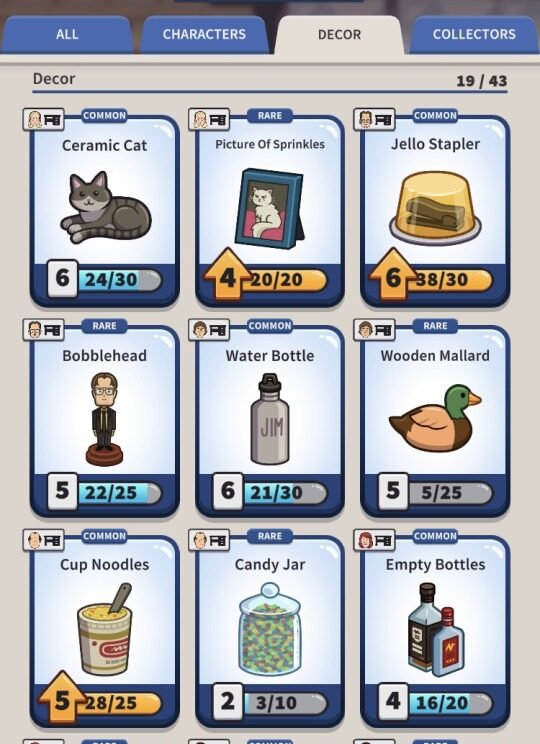
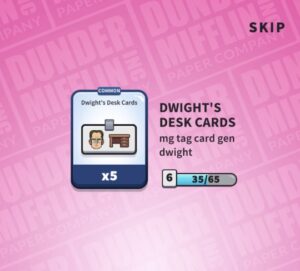
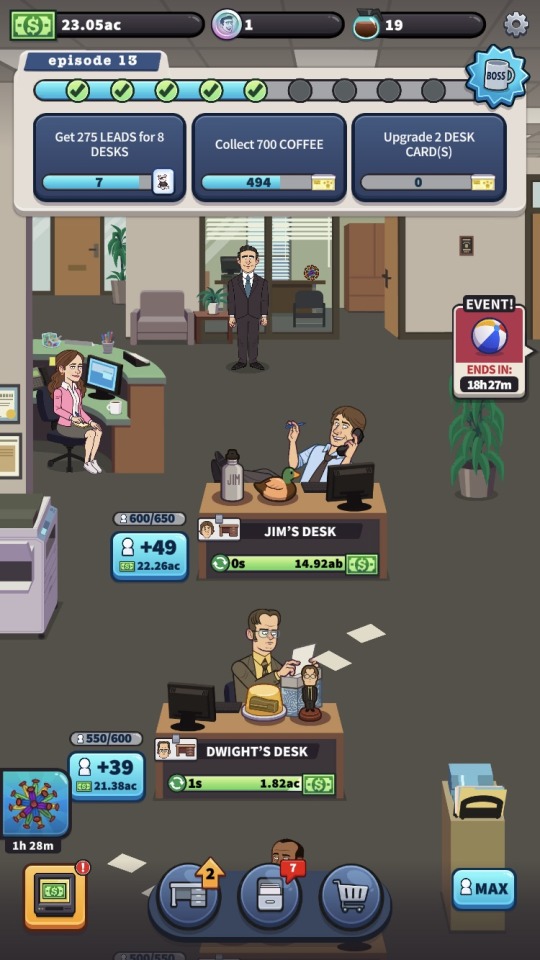 Ok, so now that you all know this isn’t a terribly high-quality game, let’s talk about how freaking charming it is. Seeing the Dunder-Mifflin friends doing their repetitive work tasks makes a fun little break from my repetitive work tasks. And since it’s a pay-to-win style idle clicker, the huge stacks of cash become kinda meaningless and it’s the other, special currencies, like coffee, ShruteBucks and ScottCoins that are actually valuable. The cash quickly maxes out thousands or billions or actual numbers, and becomes aa, ab, ac, etc. There’s something ridiculous about the workers getting billions of billions of dollars but actually needing, say, 27 coffees to complete the next objective, and then after getting all the objectives, getting the 15 ScottCoins for completing the chapter. It makes a really delightful break when doing the kinda pointless and repetitive tasks that so many workplaces seem to require.