Specialized Skills

When I was in college, I was often asked what I planned to do with my degree in classics. No career counselor had suggested that studying classics is preparation to move to China, and that living China is preparation for game development, so I would have trouble answering this question.

I’ve started to do some work for National Geographic, on the new World of Secrets Facebook game. Part of this job involves reading news about classical archaeology to determine the most awesome ones, and another part involves playing the game lots and lots, and writing. Playing games, writing, and reading interesting nerd things are pretty much my skill set.

Archival records

And now I know that the answer to “What do you do with a degree in Classics?” is “Worry that game characters will damage fictional artifacts with their fictional camera flashes.”

Related: Classics skills in game development, Iris interview about classics in game dev,  even using classics skills in retail.

Posted in Chapel Hill | Tagged , , , , , , | 4 Comments

Indie Development at Geek Girl Con

I’m going to be speaking at Geek Girl Con this fall, discussing women’s experiences in game development on a panel with some amazing women, and I’m also talking about press kit hacking for indie devs.

“Press Kit Hacks for Indie Devs” will help indie game developers get the most out of the time they have to spend marketing and promoting their game.

While indie games used to mean a little side project, more and more talented game developers are actively choosing to go the independent development route. In many ways, this can be seen as a conscious choice to focus on developing the best game possible without creative input from investors or marketing people.

Unfortunately, the App Store is flooded with games, and without any marketing, some really amazing indies get lost in the noise. I’m a games journalist, I love indie games, and I’m always looking for interesting new titles to review, and I still miss amazing games. There’s just so many new games coming out every day.

I think most indie developers have actively decided to focus on making a game over all other aspects, and memorizing a smarmy elevator pitch or marketing buzzwords just doesn’t ring true. So, I’m going to be talking about ways that indie developers can get the most value from their marketing hours by building a press kit that makes promotion easier with an appealing press release, answering all the key questions a journalist will have, and including good game assets.

Via Indie Development at Geek Girl Con | The Indie Game Magazine .

Posted in New York City | Tagged , , | Leave a comment

App Design Class

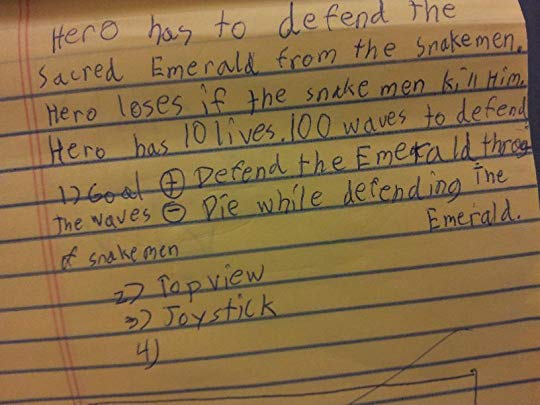
I always enjoy reading student work in the Game Concepts class.

I’m so proud when students turn their rambling and epic game ideas into succinct summaries with player objectives, win conditions and fail conditions.

Posted in Chapel Hill | Tagged , , , | Leave a comment

Failstate Fourth Wall

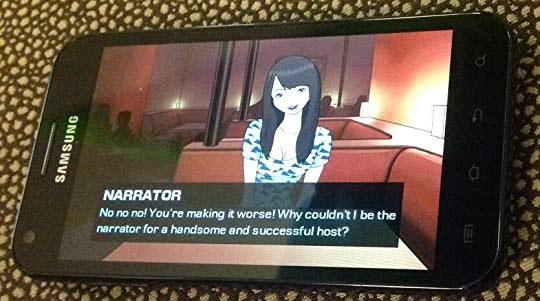
What happens when I’m encouraged to write failstate messages…

Working on Tokyo Hosto was a great time, and I’m pleased to see it coming together.

Posted in Chapel Hill | Tagged , , , , , , , | 1 Comment

A Study in Silks by Emma Jane Holloway

A Study in Silks by Emma Jane Holloway is described as the adventures of Evelina Cooper, the mystery-solving niece of Sherlock Holmes. I was interested in a society lady detective and foggy Victorian London is a great setting for a mystery novel.  (I am in North Carolina! My reading of escapist fiction has exponentially increased! I’m sure these are totally unrelated!) But on the other hand, I made the mistake of reading the Gone With the Wind “sequel” and half a dozen dreadful Pride and Prejudice spinoffs, and it turns out that just because something is inspired by a book I like, doesn’t mean it will be good.

A Study In Silks is so much more than a Holmes spinoff. The story blends the careful detail exposition that makes Arthur Conan Doyle fun to read, and references to Holmes canon that add depth for fans and don’t detract if readers miss them. (Halfway in, Uncle Sherlock returns from Bohemia, where there’s been something of a scandal.) The mystery involves artifacts from Heinrich Schliemann’s Troy dig, a crew of Chinese craftsmen working in secret, code-breaking, a gypsy knife-thrower, and all the mysterious notes and listening at doors that make Victorian novels so lovely.

I hesitate to call this steampunk, because that conjures images of watch parts glued to waistcoats, when what I mean is a Victorian London full of Jules Verne and Space 1888 science. Powerful steam barons run their districts by controlling access to essential energy, that lights and heats homes. Dozens of servants and clockwork appliances keep grand society homes running smoothly. Despite the scientific advances, Victorian mores reign. Evelina, and her heiress friend Imogen, are presented to the queen in preparation for their first London Season, and even while solving the murder, Evelina takes care not to be unchaperoned with any young gentlemen.

“There are twenty-four dances,” Imogen said brightly, examining the dance card once they shed their wraps and put on their dancing slippers. “Twenty-four chances to sort the toads from the automatons.”

About four inches tall, the tiny booklet had a richly colored cover ornamented with gold leaf, as well as a miniature pencil dangling from a cord. The whole works hung from a ribbon loop. What made this Season’s cards unique was the novel way they opened. If one pushed the button to the left, only pages with unclaimed dances fanned out for viewing. The right-hand button showed them all.

Evelina slipped the loop of her card over her wrist. “Do you have a preference for dance partners?”

“I’m partial to the toads. At least they have personality.”

The story is a page-turning adventure with colorful characters in a delightful alternative history. On another level, it’s also a clever satire, describing a world in which corporations, headed by steam barons, control access to essential resources and therefore rule the populace and determine the path of scientific discovery.

A Study in Silks is the first in a trilogy about Evelina Cooper, and I look forward to returning to this likeable cast in steam-powered Victorian London.

This review is based upon an ARC. Thanks! Opinions are my own, and a free book has never stopped me from snarking about awful prose before.

Posted in Books, Chapel Hill | Tagged , , , , , | Leave a comment

Flavortext Superpower

As part of the class in game design, we ask the students to come up with unique, descriptive titles for their completed games, and to write other game text like a one-sentence summary or a brief instructional screen.  Usually I make suggestions, or brush up the kids’ drafts, and they’ll get excited as their names and descriptions start to resemble professional games.  The students with a literary bent recognize that they’re consciously choosing the vocabulary they’ve learned from games, and the kids without that still get excited as we plug their game concept into press release boilerplate.

“Miss Meg! This sounds just like a real game!” one of my students asked today, happily rereading what we’d just written, “How did you learn to do this?”

“One $25 content writing gig at time, kids.”

Posted in Chapel Hill, Gaming Culture, North Carolina | Tagged , , , , , , , , | Leave a comment

Royal Mistress

New book review of Anne Easter Smith’s Royal Mistress, in which I display more of my vast knowledge of the British monarchy, and prove that 90% of it’s from historical novels.  (The remaining 10% is from researching interesting parts of historical novels, and wandering off into Wikipedia. Thanks, technology!):

I was interested in Anne Easter Smith’s Royal Mistress because I loved one of her previous novels, Daughter of York I’m branching out a little bit from Tudor historical novels into War of The Roses historical novels, and I’m getting interested in Edward IV. Mostly because of Daughter of York, actually.

I was interested in Anne Easter Smith’s The Royal Mistress because I loved one of her  previous novels, The Rose of York. I’m branching out a little bit from Tudor historical novels into War of The Roses historical novels, and I’m getting interested in Edward IV. Mostly because of The Rose of York, actually.

The Royal Mistress tells the story of Jane Shore, a London merchant’s wife who catches the eye of King Edward IV. Of course, he’s married to Elizabeth Woodville (and possibly also Eleanor Butler) but that doesn’t stop him from pursuing Jane. Or, any other attractive ladies, for that matter. I have no idea how he managed to get anything done.

Jane is a likeable character, remaining honest and optimistic throughout all of twists of fates. She suffers through an unpleasant arranged marriage with William Shore, a merchant in London like her father, but the marriage ends when Edward discovers Jane. The marriage ends, historically, with an annulment on the grounds of impotence. In this novel, William actually is unable to perform his, ahem, husbandly duties, although I’d always just assumed that William was bought off by Edward, and traded the end of his marriage and an embarrassing annulment for wealth and royal connections.

Her long-lasting romance with the king follows, bringing her new wealth, prestige, and awkward run-ins with the queen. She gains a reputation for kindness to Londoners. With Edward’s death, and the unsettled years that follow, she loses her protector and her wealth and influence. She keeps her beauty and good nature, though, which quickly finds her new protectors at the royal court, and when Richard III’s strict morality (and revenge for her past liaison with Edward) sends the law after her, she even finds her second husband while she’s in Ludgate jail.

Jane’s lifelong friendship with Sophie, beginning when they’re young girls from textile families in London, is one of the nicest parts of the story, and shows how Jane doesn’t let the wild reversals in her fortune change her.

The only weak spot — and this is a minor weakness is a great historical novel — comes in Jane’s fondness for writing couplets and rhymes about her situation. Although much loved by other characters, I didn’t find these funny at all.

Overall, this is a great story, with careful details from the era and warm, realistic characters.

I received this book from the publisher to review.

Originally written for a section of Yahoo! that’s been canned. Freelancing is awesome. 

Posted in Books, Chapel Hill | Tagged , , , , , , , | Leave a comment

Spending Time With My Family

Bored cashier: $15.17

My dad: Is the year in which Martin Luther writes his 95 theses.

Confused cashier: …

Meg:  Oh, Dad, please just pay the guy.

Posted in North Carolina | Tagged , , | 1 Comment

Recent posts

I feel like I’ve not written very much here recently, so here’s a roundup what I’ve been doing:

I went to ECGC and heard game writer Tracy Seamster tell me that reading PostSecret and eavesdropping on the train is totally part of the creative process. I also went to MakerFaire NC and insisted I was just visiting for fun, and then I wrote about it for Geek.

Wrote about Star Trek: Rivals for Geek, then I beat Matt twice in a row and was so proud of myself that I wrote a strategy guide. (Although, whenever I win, it’s due to my superior strategy and ability, and whenever I lose, I just happened to draw bad cards.)

Worked on my Chinese again, using the iPad. When I wasn’t studying, I admit to playing Candy Crush Saga, and two old-school RPGs 9th Dawn and Avernum: Escape From The Pit.I also reviewed three trending iOS games for iPlay Gamer, and re-remembered why I love indies.  There was some internet excitement about XBONE/ PS4, but I wrote about what will happen to small-time games publications now that Amazon does indies instead.

This fall, I’ll be speaking about press kit hacking for indie dev at Geek Girl Con,  and also on a GGC panel about the experiences of women in games, along with some really amazing women.

Posted in Chapel Hill | Tagged , , , , , | 1 Comment

Still Life With Fail Fire

Teaching children is hard. I’ve written before about the industry codeswitching between developers and journalists, and trying to keep dev jargon out of my pieces for enthusiast publications.

With the kids, I try to say things like Will your player know he has to try again? and Have you taught your player how to do that? but more often I catch myself telling the 8-years-olds that their games need a narrative arc. My teaching is more effective with the teenagers, who are excited to meet a real professional game developer. (Without fail, someone asks if I know Notch.) I hope that actually seeing a female game designer will show any interested girls that it’s a viable career option, but so far my boy students outnumber my girl students more than ten to one, so they’re also getting the usual message about what game development looks like.

Anyway, after I told my class that a good game has a clear conclusion, one of my students made this as the bad ending:

fail

I don’t remember saying failure state in that class… but I might have.

Related: Other students amusing me with fail.

Posted in Chapel Hill | Tagged , , | 2 Comments